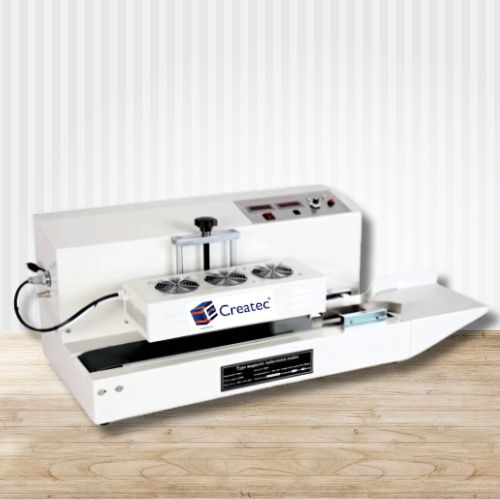
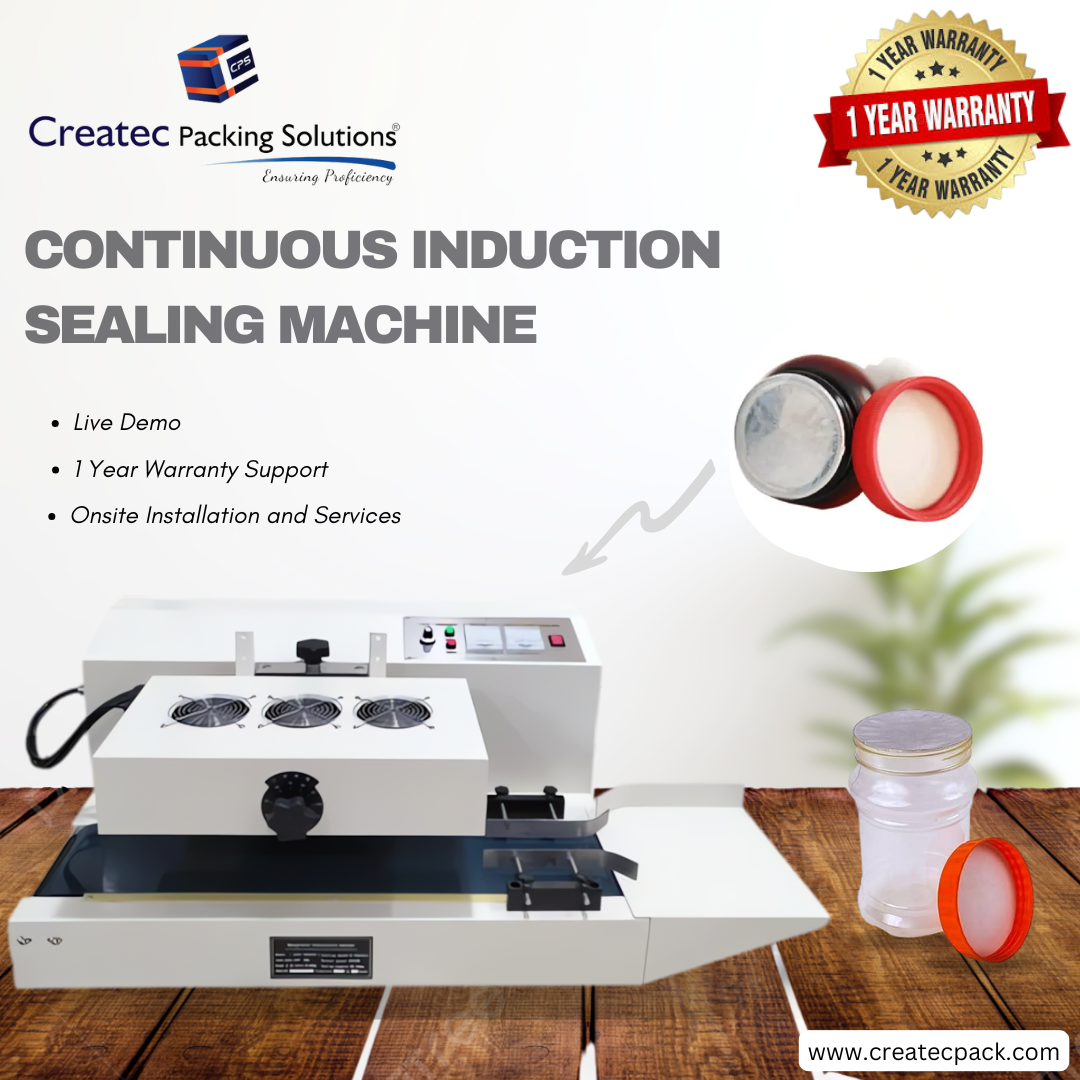
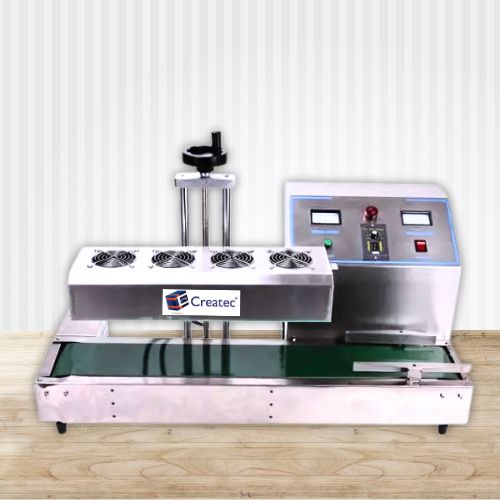
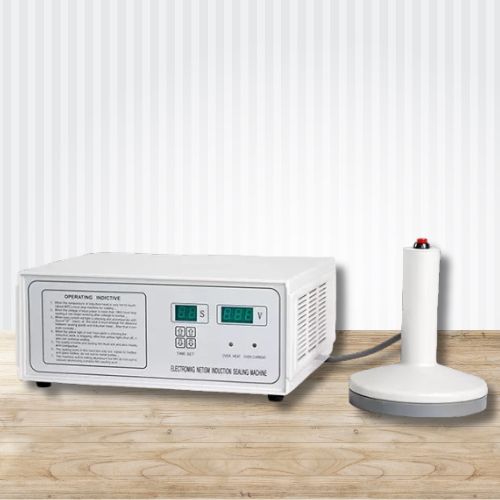
continuous induction sealing machine is used to seal containers with induction-compatible materials, typically for sealing caps on bottles and jars. This method ensures a tamper-evident and airtight seal, preserving the freshness and integrity of the product.
Here’s an overview of its features, uses, and benefits:
- Induction Coil: Generates an electromagnetic field that heats the foil liner inside the cap, creating the seal.
- Conveyor System: Continuously moves containers through the sealing process, making it suitable for high-volume production.
- Control Panel: Allows operators to adjust parameters such as power level, conveyor speed, and sealing time.
- Cooling System: Keeps the induction coil and surrounding components cool to prevent overheating.
- Adjustable Height: Accommodates containers of various sizes by adjusting the height of the induction coil.
- Safety Features: Includes alarms and automatic shutoff mechanisms to ensure safe operation.
Common Uses:
- Food and Beverage Industry: Sealing bottles and jars containing liquids, powders, and other food products.
- Pharmaceuticals: Ensuring the integrity and safety of medicines and supplements.
- Cosmetics: Sealing containers of lotions, creams, and other beauty products.
- Chemicals: Packaging of industrial chemicals, cleaning agents, and other hazardous materials.
- Agriculture: Sealing containers of pesticides, fertilizers, and other agricultural products.
Benefits:
- Tamper-Evident Seals: Provides a secure and tamper-evident seal that enhances product safety and consumer confidence.
- Extended Shelf Life: Creates an airtight seal that helps preserve the freshness and quality of the product.
- High Efficiency: Suitable for high-speed, continuous production lines, increasing overall productivity.
- Versatility: Can be used with a variety of container sizes and materials, including plastic, glass, and metal.
- Non-Contact Sealing: The induction process does not require physical contact with the container, reducing the risk of contamination.
Operation Process:
- Preparation: Place the induction-compatible liner inside the cap and screw it onto the container.
- Conveyor Loading: Place the containers on the conveyor belt, which moves them under the induction coil.
- Induction Sealing: The induction coil generates an electromagnetic field, heating the foil liner and bonding it to the container’s rim.
- Cooling: The sealed area cools and solidifies the bond, ensuring a secure seal.
- Output: The sealed containers are discharged from the conveyor system.
Maintenance Tips:
- Regular Cleaning: Keep the induction coil and conveyor system clean to maintain optimal performance.
- Inspection: Regularly check the induction coil, cooling system, and conveyor for wear and tear.
- Calibration: Periodically calibrate the control panel settings to ensure consistent sealing quality.
- Replace Consumables: Keep spare parts such as liners and induction coils on hand for quick replacements.
- Cooling System Maintenance: Ensure the cooling system is functioning correctly to prevent overheating.
Environmental Considerations:
- Energy Efficiency: Opt for machines with energy-saving features to reduce power consumption.
- Recyclable Materials: Use recyclable or biodegradable sealing materials when possible.
- Waste Management: Implement proper disposal and recycling practices for packaging waste to minimize environmental impact.
A continuous induction sealing machine is an essential tool for industries requiring secure and tamper-evident seals, offering efficiency, reliability, and versatility in high-volume production environments.